Overview
Being hurt in an accident changes several things at once. You are in pain, you may be off work, and within days an adjuster is asking questions you were not expecting to answer. Meanwhile the treatment you need is the one thing nobody seems in a hurry to approve.
Ontario's injury system is genuinely complicated, and almost all of it runs on deadlines that start the day you are hurt. Some of those deadlines are two years. A few are ten days. Missing one can end a claim that was otherwise perfectly good, which is why the most useful thing you can do early is simply ask.
We take the forms, the deadlines and the insurers off your plate, and we tell you where the claim really stands rather than what you would like to hear. You pay no legal fee unless we recover for you. Disbursements and, in some cases, costs may still apply — we explain these clearly before you sign.
How we help
Car and truck collisions
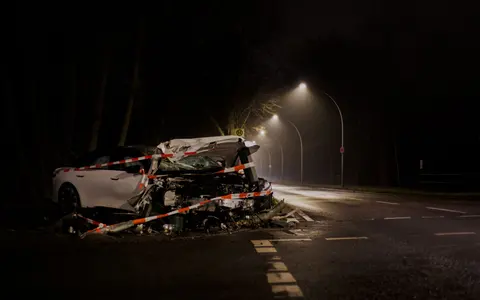
After a collision you normally have two claims running side by side: accident benefits from your own insurer, and a claim against the driver who caused the crash. They follow different rules, different forms and different decision-makers. We open both, keep the medical evidence consistent across them, and handle the adjusters so you are not answering the same questions twice.

Pedestrian and cyclist injuries
A pedestrian or cyclist struck by a vehicle can claim accident benefits without owning a car or holding a policy. Since 1 July 2026 the mandatory medical, rehabilitation and attendant care benefits still reach everyone injured, while the newly optional benefits reach a much narrower group. We work out which policy responds to you and apply to the right insurer.

Accident benefits (SABS) and denials
Accident benefits fund treatment, rehabilitation and personal care regardless of who caused the accident. The forms are unforgiving and refusals are common, often resting on an assessment that the insurer arranged and paid for. We complete the application properly, answer every refusal with medical evidence, and take the dispute to the Licence Appeal Tribunal where that is what it takes.

Slip, trip and fall injuries
An occupier of premises owes you a duty to take reasonable care that you are safe there. Falls on ice and snow carry a short, strict written notice rule, and falls caused by a municipal road or sidewalk carry an even shorter one. We send those notices immediately and preserve the salting records, incident reports and photographs before they disappear.

Dog bites and animal attacks
Ontario makes a dog's owner liable for damage from a bite or attack whether or not the dog had ever shown a sign of aggression, and without proof of fault on the owner's part. Your own share of responsibility, if any, still reduces the award. We identify every owner, obtain the animal-control record, and make sure scarring is documented properly.

Long-term disability denials
A denied or terminated long-term disability claim is a contract dispute with your insurer, not an accident benefits claim, and it runs on its own clock. Insurers frequently rely on the definition of disability tightening after the first two years. We read the policy, assemble the medical support it actually asks for, and appeal or sue within the limitation period.

Fatal accidents and family claims
When someone is killed, close family members may bring their own claim under the Family Law Act for loss of care, guidance and companionship, and for the expenses they have carried. Death and funeral benefits and a claim on behalf of the estate may also be available. We take on the insurers and the paperwork so the family can grieve rather than negotiate.
How it works
- 1
Free case review
Call us and tell us what happened. In a free 30-minute consultation we tell you which claims you appear to have, which deadlines are already running, and what the sensible next step would be. There is no obligation to go further.
- 2
We protect your deadlines
Notices go out first. Depending on how and where you were hurt, that can mean your own insurer within days, a municipal clerk within days, or an occupier and its snow contractor within weeks. This is the part that cannot wait.
- 3
We build the evidence
We gather your medical records, employment and income documents, and proof of what the injury costs you day to day. Where the injury is serious we retain qualified professionals to give expert evidence on future care and on lost earning capacity.
- 4
We negotiate, and litigate if we must
Most claims resolve without a trial, and a well-prepared file is what makes a fair offer possible. If the offer is not fair, we issue the claim and press on. You decide whether to settle, and we say plainly what we think.
How does an Ontario car accident claim work?
There are two claims, not one. The first is your accident benefits claim, made to your own insurer no matter who caused the crash. It funds treatment, rehabilitation and personal care, and for some people income support while they are off work.
The second is the tort claim — a lawsuit against the driver who was at fault. That is where pain and suffering, income loss beyond what benefits cover, and the cost of future care are pursued.
The two run on separate tracks. Accident benefits disputes go to the Licence Appeal Tribunal; the tort claim goes to the Superior Court of Justice. What is said in one can surface in the other, which is why we run them together rather than as unrelated files.
What should I do in the first 72 hours?
Get medical attention, even if you feel only shaken. Symptoms that appear days later are far harder to connect to the accident when there is no record from the beginning.
Report the collision. The Highway Traffic Act requires an accident causing personal injuries to be reported to the nearest police officer forthwith, and a hit-and-run must be reported to a police officer within 24 hours to protect your uninsured motorist coverage.
Tell your own insurer you intend to claim accident benefits — the schedule sets the seventh day after the accident, or as soon as practicable. Photograph the scene, the vehicles and your injuries, and take down witness names. Then speak to a lawyer before giving any detailed or recorded statement.
What changed for accident benefits on 1 July 2026?
Ontario made most accident benefits optional. Medical, rehabilitation and attendant care benefits remain in every policy. Income replacement, non-earner, caregiver, housekeeping, death and funeral benefits are now choices the policyholder makes.
A second change catches people out. From that date the newly optional benefits cover only the named insured, their spouse, their dependants, and drivers listed on the policy. Passengers, pedestrians and cyclists still receive the mandatory benefits, but not the optional ones unless they fall inside that group.
If a policy simply renewed, the existing coverage carried over unless the policyholder agreed in writing to change it. One of the first things we do is obtain the policy that was actually in force on the day of your accident.
What is a catastrophic impairment, and why does it matter?
It is a defined term in the accident benefits regulation, not a description of how badly you feel. The criteria cover paraplegia and tetraplegia, amputation or permanent loss of use of a limb, loss of vision in both eyes, defined traumatic brain injuries, and whole-person impairment ratings at or above a set level.
It matters because the designation unlocks much higher and much longer medical, rehabilitation and attendant care limits. For someone who will need care for the rest of their life, that is often the difference between a care plan that works and one that runs out.
Because the stakes are high, insurers contest these applications hard. Some criteria cannot be assessed until enough time has passed to judge the lasting effect of an injury. Starting early, with the right assessments, is what makes the application persuasive later.
Why is a pain-and-suffering award reduced?
Two separate rules apply to pain and suffering from a car accident. The first is the threshold: you must show a permanent, serious impairment of an important physical, mental or psychological function, or permanent serious disfigurement, or death. Injuries that heal generally do not qualify, and meeting the threshold takes expert evidence.
The second is the statutory deductible. Where the award falls below a set amount, a fixed sum is simply subtracted from it. From 1 January 2026 that deductible is $47,913.01, and it disappears once the award reaches $159,708.71.
Family Law Act claims by relatives carry their own, lower pair of figures, and no deductible applies to a family claim arising from a death. All of these amounts are re-indexed each January, so the only figures that matter are the ones in force for your claim.
How our fees work
We take most injury claims on a contingency fee — what is often called No Win – No Fee. You pay no legal fee unless we recover for you. Disbursements and, in some cases, costs may still apply — we explain these clearly before you sign.
Disbursements are the out-of-pocket costs of running a claim: medical records, expert reports, filing fees. Costs are a separate risk that can arise where a claim is unsuccessful. Ontario requires the agreement to be in a prescribed standard form and requires us to give you the Law Society's plain-language consumer guide first. The consultation is free whether or not you go ahead.
What a claim can cover
No two claims are worth the same, and nobody honest will put a number on yours at the first meeting. What we can do is identify every category of loss that applies, and make sure none is left out.
- Treatment, rehabilitation and assistive devices
- Attendant care and the cost of future care
- Income lost so far, and lost earning capacity going forward
- Housekeeping and out-of-pocket expenses
- Pain and suffering, subject to the threshold and the deductible
Deadlines you cannot afford to miss
These are the rules that end claims. The shortest are far shorter than most people expect.
- Notice to your own insurer — seven days — Tell your insurer you intend to apply for accident benefits by the seventh day after the accident, or as soon as practicable. The completed application goes back within 30 days of receiving the forms.
- Municipal roads and sidewalks — ten days — Where the injury was caused by the condition of a road or sidewalk, written notice must reach the clerk of the municipality within ten days. A judge can excuse late notice, but only with a reasonable excuse and no prejudice.
- Snow and ice on premises — 60 days — An injury from snow or ice on someone's property needs written notice giving the date, time and location within 60 days, served personally or by registered mail on the occupier or its snow-removal contractor.
- Suing the person at fault — two years — The general limitation period is two years from the day the claim was discovered, presumed to be the day of the accident. Time does not run while the injured person is a minor without a litigation guardian.
- Disputing a denied benefit — two years — An application to the Licence Appeal Tribunal must be filed within two years of the insurer's written denial. Keep that letter — it is what starts the clock.
Why Lexwood Law
- Both halves of the claim — accident benefits and the case against the person at fault — run together, not in separate silos
- Saturday appointments between 10 and 3, when most offices are closed
- A written fee agreement in the prescribed standard form, with the Law Society's consumer guide, before you sign
- Service in English, Urdu, Hindi and Punjabi
- Nine practice areas under one roof, so a related estate or family issue stays with one firm
Common questions
What if the accident was partly my fault?
You can usually still claim. Ontario's Negligence Act directs a court to divide damages according to each person's share of fault, so being partly responsible reduces the award rather than ending the claim. Accident benefits are payable regardless of fault anyway.
Should I accept the insurer's first offer?
Not before you know what your claim covers. Early offers often come before the lasting effect of an injury is clear, and a settlement is normally final. Have it reviewed first — that costs you nothing.
How long does a claim take?
Largely it depends on your recovery, because a claim cannot be valued until the lasting effect of the injury is understood. Straightforward matters may resolve in months; serious injuries take considerably longer.
What if the driver was uninsured?
Every Ontario policy must include uninsured automobile coverage, which responds where the driver at fault is uninsured or cannot be identified. A hit-and-run must be reported to a police officer within 24 hours, and a written statement given to your insurer within 30 days. Where no insurance exists at all, the Motor Vehicle Accident Claims Fund is the last resort.
Do I still tell my own insurer if I wasn't at fault?
Yes. Accident benefits come from your own insurer regardless of fault, and the schedule expects notice by the seventh day. Tell them you intend to claim, then speak to us before giving a statement.
What does it cost to hire you?
You pay no legal fee unless we recover for you. Disbursements and, in some cases, costs may still apply — we explain these clearly before you sign. Every deduction is set out in writing beforehand.
Will I have to go to court?
Most claims settle without a trial. We prepare every file as though it may be tried, because that is what makes a fair settlement possible, and we are ready to go if the offer is not fair.
I was a passenger, pedestrian or cyclist — am I covered?
Usually yes. You need not own a car or hold a policy to claim accident benefits, and the mandatory medical, rehabilitation and attendant care benefits still reach everyone injured.
This page is general information, not legal advice. Every matter is different — book a consultation for advice on your situation.